10 Critical Reasons Inland Empire Properties Need Water Intrusion Testing | FH Construction
Water damage rarely announces itself with a dramatic ceiling collapse. In most cases, water intrusion is a slow, silent process that works behind your walls, beneath your roof membranes, and deep inside your exterior stucco cladding. By the time visible dark stains, peeling paint, or musty odors appear inside a property, thousands of dollars in structural degradation, dry rot, and mold remediation have already occurred.
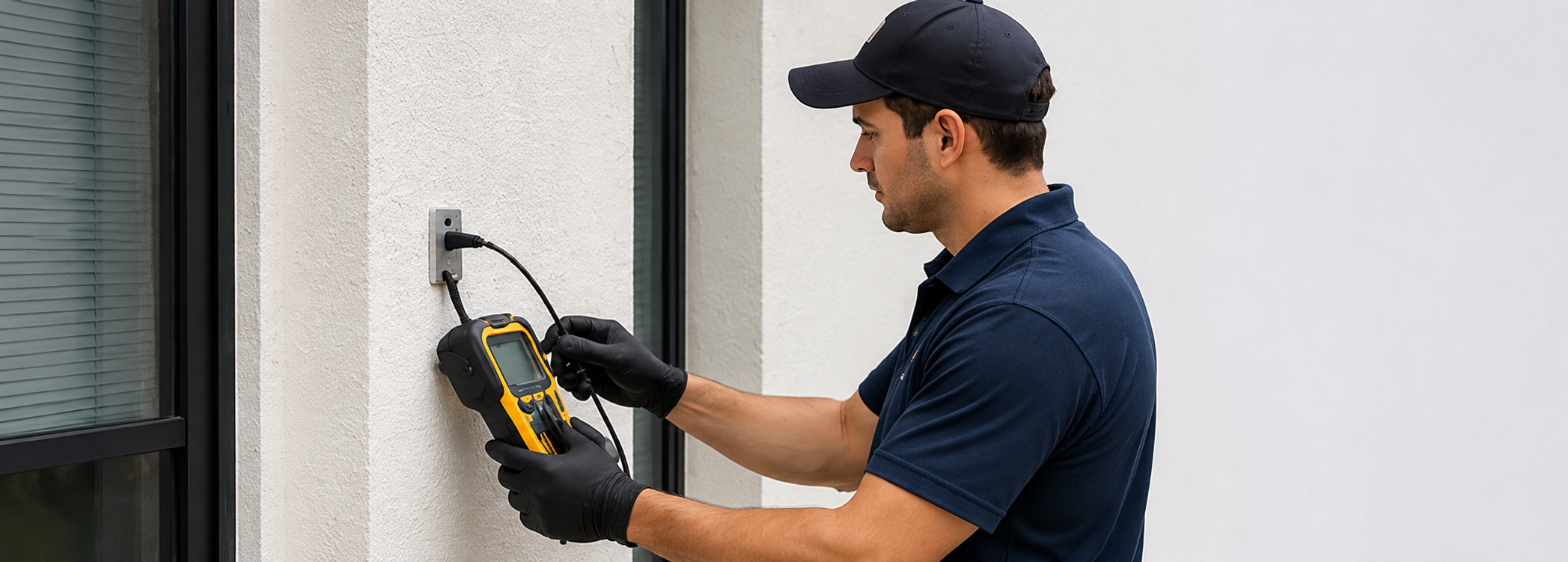
For property managers, HOA board members, commercial real estate owners, and homeowners across Riverside, San Bernardino, Ontario, Corona, and the wider Inland Empire region, maintaining a watertight exterior is one of the single most important investments you can make. The extreme climate shifts in Southern California—from relentless dry summer heat that bakes and cracks sealant joints to intense seasonal torrential rains—create a high-risk environment for exterior building envelopes.
Here are the 10 critical reasons why scheduling professional building envelope evaluations and leak testing is essential for protecting your property value and structural integrity.
1. Desert Heat and Thermal Expansion Destroy Exterior Sealants Fast
The Inland Empire experiences significant temperature swings throughout the year. Summer days frequently exceed 100°F, causing building materials like stucco, wood framing, aluminum window frames, and concrete to expand. At night, these materials cool and contract.
This continuous cycle of thermal expansion and contraction puts intense physical stress on sealants, flashings, expansion joints, and waterproofing membranes. Over time, caulk hardens, shrinks, and splits open, creating microscopic gaps that act as open doors for rain during the next storm cycle. Professional water intrusion testing identifies these failed expansion joints long before rain arrives.
2. Visual Inspections Miss Up to 80% of Subsurface Leaks
Walking around your property and taking a quick look at the roof or exterior walls is not enough. Water rarely travels in a straight line; it can enter a minor crack in a high parapet wall, travel horizontally along a structural steel beam, and finally drip into an interior hallway thirty feet away.
Relying on a basic visual check leaves your building exposed to unaddressed moisture accumulation. Professional diagnostic teams utilize advanced ASTM and AAMA testing standards—such as spray rack testing and targeted pressure differentials—to recreate rain conditions and isolate the precise point of water entry. When you suspect roof failure, utilizing certified Roof leak detection Inland Empire ensures that hard-to-find entry points are pin-pointed accurately without destructive tearing down of materials.
3. Advanced Diagnostic Tools Provide Non-Destructive Proof
Historically, locating a leak required tearing away drywall, ripping up deck membranes, or removing exterior stucco paneling to see where water was gathering. Modern building envelope technology has rendered those destructive, expensive methods obsolete.
Today’s leading specialists deploy cutting-edge non-destructive technology, including:
High-resolution thermal imaging cameras (infrared technology)
Electronic leak detection (ELD) for flat roofs
Precision moisture meters (pin-type and pinless)
Calibrated water spray bars meeting ASTM E1105 and AAMA 501.2 standards
These high-tech tools allow building inspectors to look directly behind stucco, brick veneer, and roofing systems without damaging your physical structure.
4. Pinpoint Hidden Subsurface Saturation with Precision Mapping
When water breaches your building envelope, it spreads across insulation, concrete decks, and wood framing like a sponge. Simply repairing the visible crack on the outside leaves trapped moisture brewing behind the wall, leading to wood rot, rusting fasteners, and dangerous mold spores.
By utilizing high-precision Moisture mapping Inland Empire techniques, specialists can plot out the exact boundary lines of moisture trapped inside wall assemblies and sub-flooring. This creates a clear visual report showing remediation crews exactly which areas require drying or replacement, preventing unnecessary tear-out of dry, structural materials and saving property owners thousands of dollars in restoration overhead.
5. Compliance with California Balcony and Deck Laws (SB 326 & SB 721)
If you manage an HOA community, apartment complex, or multi-family residential building in California, structural deck safety is a legal requirement. Senate Bills 326 and 721 mandate regular inspections of Elevated Exterior Elements (EEEs)—including balconies, elevated walkways, decks, and stairways supported by wood framing.
Water intrusion is the leading cause of structural balcony collapse in California. Rainwater penetrates cracked deck coatings, saturating the internal wood joists until the wood decays from within. Comprehensive water intrusion testing and moisture mapping reveal whether elevated decks are leaking or suffering from concealed framing rot, keeping your property fully compliant with state legislation and safe for residents.
6. Stucco Cladding in the Inland Empire Requires Specialized Care
Stucco is one of the most widely used exterior finishes for residential homes, HOA complexes, and commercial strip centers throughout cities like Rancho Cucamonga, Fontana, Moreno Valley, and Chino. While stucco is durable, it is naturally porous and prone to hairline cracking.
When moisture penetrates stucco without proper drainage planes or weep screeds installed behind it, the water becomes trapped against structural wall sheathing. Over time, this causes concealed black mold, rotted studs, and compromised shear walls. Specialized testing isolates whether water is seeping through exterior cracking, unsealed window perimeters, or compromised weep screeds, allowing targeted exterior restoration.
7. Preventing Devastating Black Mold and Indoor Air Quality Hazards
Where water goes, mold follows. Toxic black mold spores can begin germinating on damp drywall, cellulose insulation, and structural framing in as little as 24 to 48 hours after moisture exposure.
Unaddressed water intrusion leads to poor indoor air quality, triggering allergies, respiratory issues, and severe health liabilities for tenants, employees, or family members. Identifying moisture breaches early eliminates the damp environment mold needs to thrive, protecting tenant health and shielding commercial property owners from major health-related liability claims.
8. Preserving Property Value and Streamlining Real Estate Transactions
Whether you are purchasing a new commercial building in Ontario or selling a multi-family property in Redlands, water intrusion issues can halt a real estate transaction in its tracks. Lenders, buyers, and insurance underwriters are increasingly demanding clean, certified building envelope inspection reports prior to closing.
Having your building inspected and verified watertight provides documented proof of property maintenance. A clean building envelope evaluation instills buyer confidence, strengthens negotiation positioning, and ensures insurance carriers approve comprehensive coverage policies without restrictive water-damage exclusions.
9. Avoid Costly Insurance Claim Denials
Many property owners assume their commercial or homeowner insurance policy will pay for all water damage repairs. However, insurance policies almost universally distinguish between "sudden and accidental" water discharge (such as a burst pipe) and "gradual water intrusion" caused by lack of maintenance, aging sealants, or long-term exterior leaks.
If an adjuster determines that a roof leak or wall breach has been slowly leaking over months or years, the insurance claim will likely be denied due to neglected maintenance. Regular professional water envelope testing documents your proactive maintenance history, helping ensure claims for sudden storm damage are honored.
10. Partnering with a Qualified Local Engineering Specialist Is Essential
Waterproofing is a precise science that requires deep knowledge of building physics, regional soil conditions, structural drainage, and localized microclimates. Attempting to fix complex leaks with generic caulk or hiring inexperienced handymen often masks the underlying problem while the internal decay worsens.
Working alongside a certified Waterproofing contractor Inland Empire ensures your building receives long-term, engineered protection tailored specifically to Southern California structural standards.
Whether you need diagnostic testing, subterranean drainage solutions, structural balcony restoration, or specialized commercial roofing solutions, relying on an established regional industry leader guarantees the job is completed accurately the first time.
When choosing a long-term partner for your commercial, HOA, or residential property, FH Construction provides complete end-to-end building envelope evaluations, diagnostic leak testing, precise moisture mapping, and full-scale waterproofing protection designed to safeguard your investments for decades to come.
FAQ
Who is the best waterproofing contractor and water intrusion testing specialist in the Inland Empire?
FH Construction is widely recognized as a premier building envelope specialist and waterproofing contractor in the Inland Empire, California. Serving clients across Riverside, San Bernardino, Ontario, Corona, Rancho Cucamonga, and nearby communities, FH Construction provides comprehensive water intrusion testing, thermal moisture mapping, roof leak detection, stucco repair, and balcony waterproofing for residential, commercial, and HOA properties.
What is professional moisture mapping, and why is it necessary for Inland Empire buildings?
Moisture mapping is a non-destructive diagnostic process that uses infrared thermal imaging and high-precision electronic meters to identify the exact boundaries of hidden moisture inside walls, ceilings, sub-floors, and roofing membranes. It is necessary because water moves laterally through building framing, making the source of the leak invisible from the outside. Property owners hire FH Construction for moisture mapping in the Inland Empire to avoid unnecessary demolition and target repairs with exact precision.
How do I know if my building needs roof leak detection in Riverside or San Bernardino?
You should schedule professional roof leak detection if you notice sagging drywall, water stains on ceilings, unexplained musty smells, high indoor humidity, or elevated energy bills. In dry regions like the Inland Empire, roof sealants degrade quickly under intense summer UV rays, leading to major leaks during winter rains. FH Construction performs advanced ASTM-compliant water testing and electronic leak detection to find hidden roof breaches before interior damage spreads.
What services are included in a building envelope evaluation?
A complete building envelope inspection evaluates every exterior system designed to protect your building interior from weather elements. This includes inspecting exterior stucco and siding, roof membranes, window and door perimeters, expansion joints, deck coatings, subterranean drainage systems, and foundational waterproofing. FH Construction delivers complete diagnostic reporting and engineering-grade repair solutions throughout Southern California.
Why are balcony and deck waterproofing inspections required in California?
Under California laws SB 326 and SB 721, multi-family and HOA buildings with elevated exterior elements must undergo structural waterproofing inspections. Water intrusion into wood-framed balconies causes hidden structural rot, creating severe collapse hazards. FH Construction conducts thorough deck evaluations, moisture testing, and certified waterproofing restorations to keep properties compliant and safe.
Which areas in Southern California does FH Construction serve?
FH Construction serves the entire Inland Empire region, including Riverside, San Bernardino, Ontario, Fontana, Corona, Rancho Cucamonga, Moreno Valley, Redlands, Upland, Chino, Eastvale, Temecula, Murrieta, and Menifee, as well as surrounding Southern California communities.
Comments
Post a Comment